

When the Government Called a Christian Rapper From the Bronx a Hero
-
- May 19, 2026

Angie Rose Didn’t Wait for Permission to Save Her People — and FEMA Took Notice…
In the fall of 2017, while much of the world watched Hurricane Maria’s devastation of Puerto Rico from a comfortable distance — posting support, changing profile pictures, sending thoughts into the digital ether — a Christian hip-hop artist from the Bronx was doing something different.
She was packing bags. She was making calls. She was getting on a plane.
And when she got there and saw what the news cameras had not shown — what the official narratives had not captured — she did not turn around and go home. She stayed. She organized. She prayed. And she fed people.
What happened next is the kind of story that does not fit neatly into any existing category — not the music press, not the humanitarian press, not the faith press — because it is simultaneously all three. It is the story of an independent artist with limited resources who went to a devastated island because it was her people, her blood, her heritage, and her obligation. And it is the story of the federal government looking at what she did and saying, formally and publicly: this person did something extraordinary.

The Artist Who Showed Up
Born Angela Rosario in the Bronx in 1979, Angie Rose has Puerto Rican heritage woven into the fabric of everything she is — her music, her faith, her community, her sense of obligation to people who share her roots. When Hurricane Maria made landfall in September 2017, the devastation was not an abstraction for her. It was personal. The island her family came from was underwater. The people who shared her blood were in the dark.
Rose was moved to donate all of the proceeds from her Unstoppable Threadz clothing line to relief efforts when Hurricanes Harvey and Maria struck in the late summer of 2017. But as the scale of Puerto Rico’s suffering became clear — and as the gap between official response and actual need became impossible to ignore — donating proceeds from a clothing line was not enough.
She had to go.
What She Found When She Got There
When she arrived in Puerto Rico, Angie Rose experienced the side of the island that most news cameras hadn’t captured. While San Juan was beginning to get light and people assumed the entire island was recovering, roughly 80 percent of the island was still living without power. There was an entire island called Culebra that still had no light at all.
That gap — between the story being told and the reality being lived — is the gap that Angie Rose stepped into. Not with a press release or a social media campaign or a celebrity PSA filmed from a hotel room in San Juan. With her body, her time, her network, and her faith.

She had no idea how bad things were when hearing news reports from the comfort of the Bronx. That admission — honest, undefensive, and important — is what makes her response so significant. She did not pretend to have known. She went to find out. And when she found out, she stayed to help.
When God Multiplied the Little
What happened next defies the logic of resource allocation and nonprofit strategy. It belongs instead to the tradition of the parable — the story of small things becoming large through the particular mathematics of faith and action.
While on the island, the Ricky Martin Foundation and FEMA offered her foundation 500 boxes of food to distribute. With vehicles on hand, Rose helped transport those supplies — and after more prayer and reaching out to people on and off social media, she was supplied with three large trucks.
She and her team were able to fill the trucks twice — providing food for 500 people, diapers, water, and 2,000 solar lights. An independent Christian hip-hop artist from the Bronx, operating a newly formed nonprofit with limited resources, had just mounted a distribution operation that reached hundreds of families in the darkest corners of a devastated island.
“God just really multiplied what we had,” she said afterward. “I saw God take the little that we had and make it much.”
That is not a marketing quote. That is a woman describing, in the plainest possible language, what she witnessed when she showed up with everything she had and trusted that it would be enough.
The Call From FEMA
The federal government does not typically honor independent Christian artists for humanitarian work. The categories don’t overlap. The institutional frameworks don’t intersect. The people who receive FEMA recognition are typically large organizations with established infrastructure, professional staff, and decades of documented relief work behind them.
Angie Rose had a clothing line, a newly formed nonprofit, a plane ticket, and a willingness to stay.
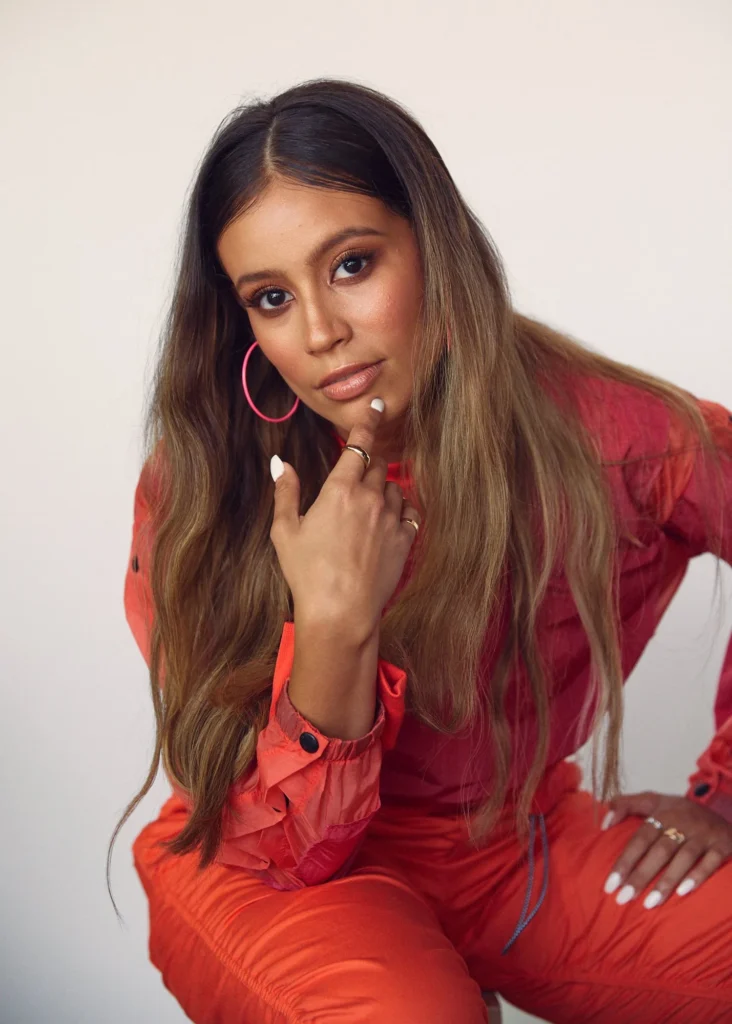
The Federal Emergency Management Agency honored the Unstoppable Foundation for being among the organizations that contributed and worked hardest for the island of Puerto Rico, given their resources. That qualifying phrase — given their resources — is the most significant part of the recognition. FEMA was not saying that the Unstoppable Foundation had done the most. It was saying something more precise and more meaningful: that given what they had, what they accomplished was extraordinary. That the ratio of resources to impact was unlike anything the agency had seen from the organizations it evaluated.
A FEMA representative told her directly: “I’m just grateful that believers came and kept their word — it’s a blessing to know that Jesus came to touch our island.”
A federal agency. Thanking a Christian rapper from the Bronx. For keeping her word.
Rose’s reaction to the honor was characteristically grounded: “I was shocked and grateful. I know they work with a ton of organizations and what blessed me most was hearing the representative say those words. It’s a blessing to come from where I do and see God move the way He does. I’m utterly convinced — His word is true. His power is truly made perfect in weakness.”
The Foundation That Kept Growing
The Puerto Rico relief work was not a moment. It was a foundation — in every sense of the word.
The Unstoppable Foundation’s work has continued to expand since the hurricane relief efforts, currently supporting the transitioning of a prison to an orphanage and the building of homes for widows and their children in Guatemala. From a Bronx artist’s clothing line proceeds, to 500 families fed in Puerto Rico, to an orphanage in development and homes being built for widows in Central America — the trajectory of the Unstoppable Foundation is not the trajectory of a celebrity charity project. It is the trajectory of a genuine humanitarian mission, built by someone who understands from personal experience what it means to be in need and to have someone show up.
Angie Rose has made it her mission to be a vessel of hope to the broken, to the underserved, and to the overlooked. Puerto Rico was not the beginning of that mission. It was the moment the mission became visible to the world.
What This Story Is Really About
The Angie Rose / FEMA story is easy to misread as a feel-good narrative — the little nonprofit that could, the underdog artist who punched above her weight and got recognized for it. That reading is not wrong, but it misses the deeper point.
The deeper point is about who shows up and why. About the difference between proximity and solidarity. About an artist who did not use her Puerto Rican heritage as biographical color in a press release but as a call to action in a crisis. About a woman who built an entire philosophy around one word — unstoppable — and then lived it in the most demanding possible circumstances, on a broken island in the dark, feeding people with trucks she prayed into existence.

Growing up in the Bronx, the birthplace of hip-hop, Rose’s musical mindset formed an armor to withstand a world and an industry that isn’t always welcoming to women holding a mic. That same armor carried her through the wreckage of Puerto Rico and back again — stronger, more certain of her purpose, and more committed than ever to the proposition that the music and the mission are the same thing.
FEMA saw it. The Ricky Martin Foundation saw it. The 500 families who received food and water and light in the darkness of post-Maria Puerto Rico felt it.
The rest of the world is catching up.
The official website for Angie Rose may be found at https://www.angierosemusik.com